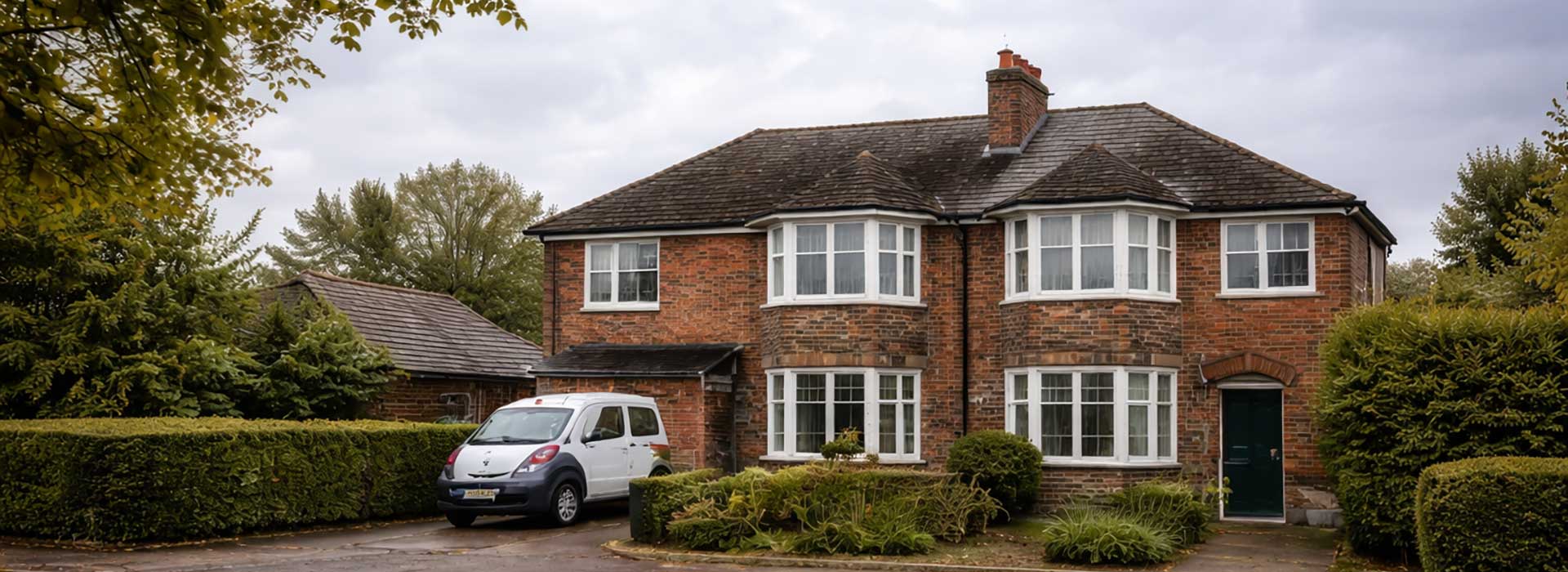
Older buildings behave differently when things go wrong
Older buildings don’t fail in the same way modern ones do. Walls move a little. Materials breathe. Repairs take longer and cost more. Insurers know this, and it shapes how cover is offered.
Age on its own isn’t the issue. It’s how the building was put together.

Construction methods matter more than the date
Many older homes were built using materials and techniques that aren’t common today. Solid walls, lime mortar, timber frames, slate roofs. All perfectly sound, just different.
Insurers assess whether those materials behave predictably during damage and repair.
Rebuild costs are often underestimated
Older buildings usually cost more to rebuild than people expect. Specialist labour, traditional materials, and conservation requirements all add up.
Market value is irrelevant here. Insurance works off rebuild cost, and older properties tend to push that number higher.
Repairs are not always like-for-like
When damage occurs, insurers often need to use matching materials or approved methods. Modern substitutes may not be appropriate or permitted.
That increases claim costs and affects how insurers price the risk.
Listed status puts a different slant on things
Listed buildings introduce additional layers. Repairs may require consent. Timeframes stretch. Costs rise.
Not all insurers handle listed properties, and those that do usually assess them carefully.
Maintenance expectations are higher
Older buildings rely on ongoing upkeep. Insurers expect roofs, gutters, and drainage to be maintained.
Claims linked to gradual deterioration or neglect are more likely to be challenged.
Common features insurers look at
- Roof condition and materials
- Type of walls and mortar
- Age and condition of wiring and plumbing
- Evidence of movement or historic repairs
- Previous claims history
Subsidence and movement concerns
Some movement is normal in older buildings. Insurers distinguish between historic settlement and active subsidence.
Evidence of past movement doesn’t automatically block cover, but it does attract scrutiny.
Escape of water risk
Older pipework can increase the likelihood of water damage. Leaks may develop slowly and go unnoticed.
Insurers sometimes apply higher excesses or conditions for water-related claims.
Modern upgrades help, sometimes
Updated wiring, heating systems, and plumbing often improve insurability. They reduce certain risks even in older structures.
That said, upgrades don’t erase the building’s underlying construction profile.
Contents insurance is usually straightforward
Contents cover for older buildings usually follows standard rules. The age of the house doesn’t change how furniture, clothing, or personal items are insured.
High-value items still need attention, regardless of the property’s age.

Why premiums vary widely
One insurer may view an older building as well-maintained and stable. Another may see uncertainty and cost.
That’s why quotes can differ sharply for the same property.
Why older buildings aren’t a problem by default
Plenty of older homes are insured without difficulty. Insurers aren’t afraid of age.
They’re cautious about unknowns, poor maintenance, and unrealistic rebuild figures.
What makes insurance smoother
Clear information helps. Accurate rebuild costs. Honest disclosure about repairs and upgrades.
Older buildings reward accuracy more than optimism.